KPV is a tripeptide of lysine, proline, and valine corresponding to the C-terminal three residues (11–13) of alpha-melanocyte-stimulating hormone (α-MSH). It is studied because it appears to retain much of the anti-inflammatory signaling profile associated with the parent melanocortin peptide while lacking α-MSH’s pigmentary activity.
That separation is what makes KPV useful as a research tool: investigators can examine inflammatory transcription control without the confounding melanocortin receptor effects that accompany the full-length hormone. Its very small size also makes it experimentally tractable in ways larger peptides are not.
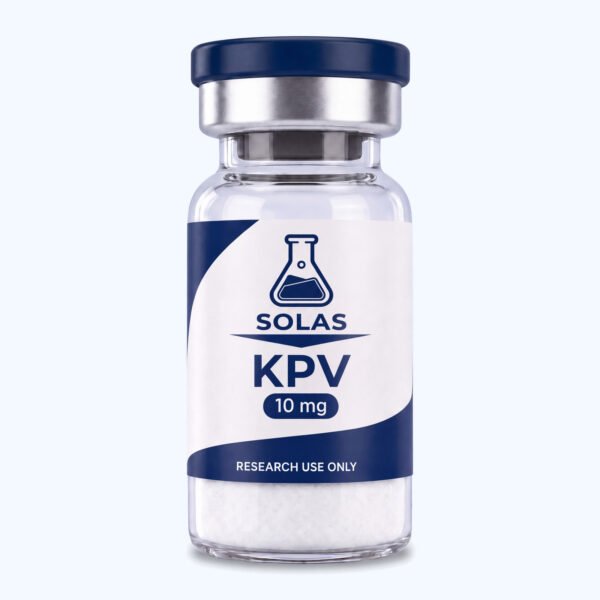
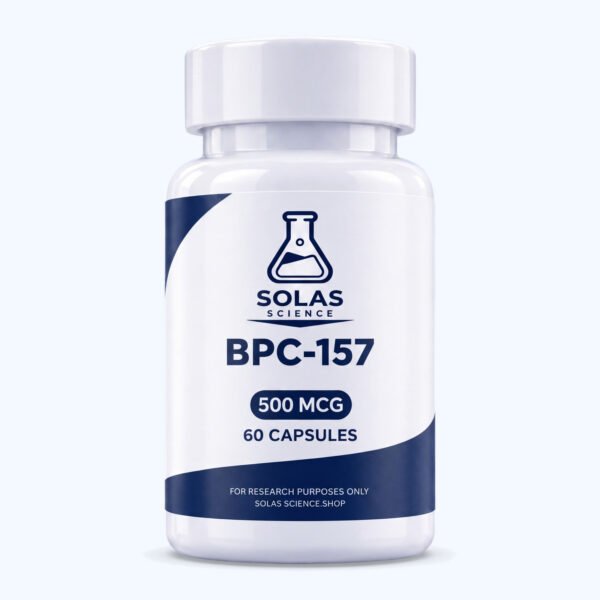
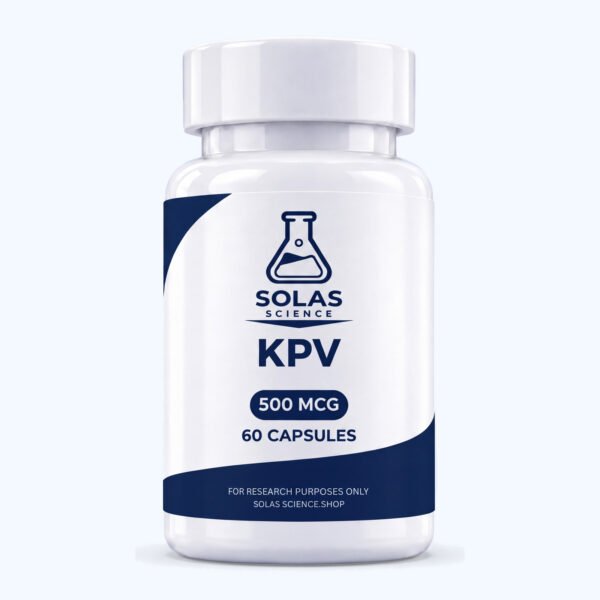
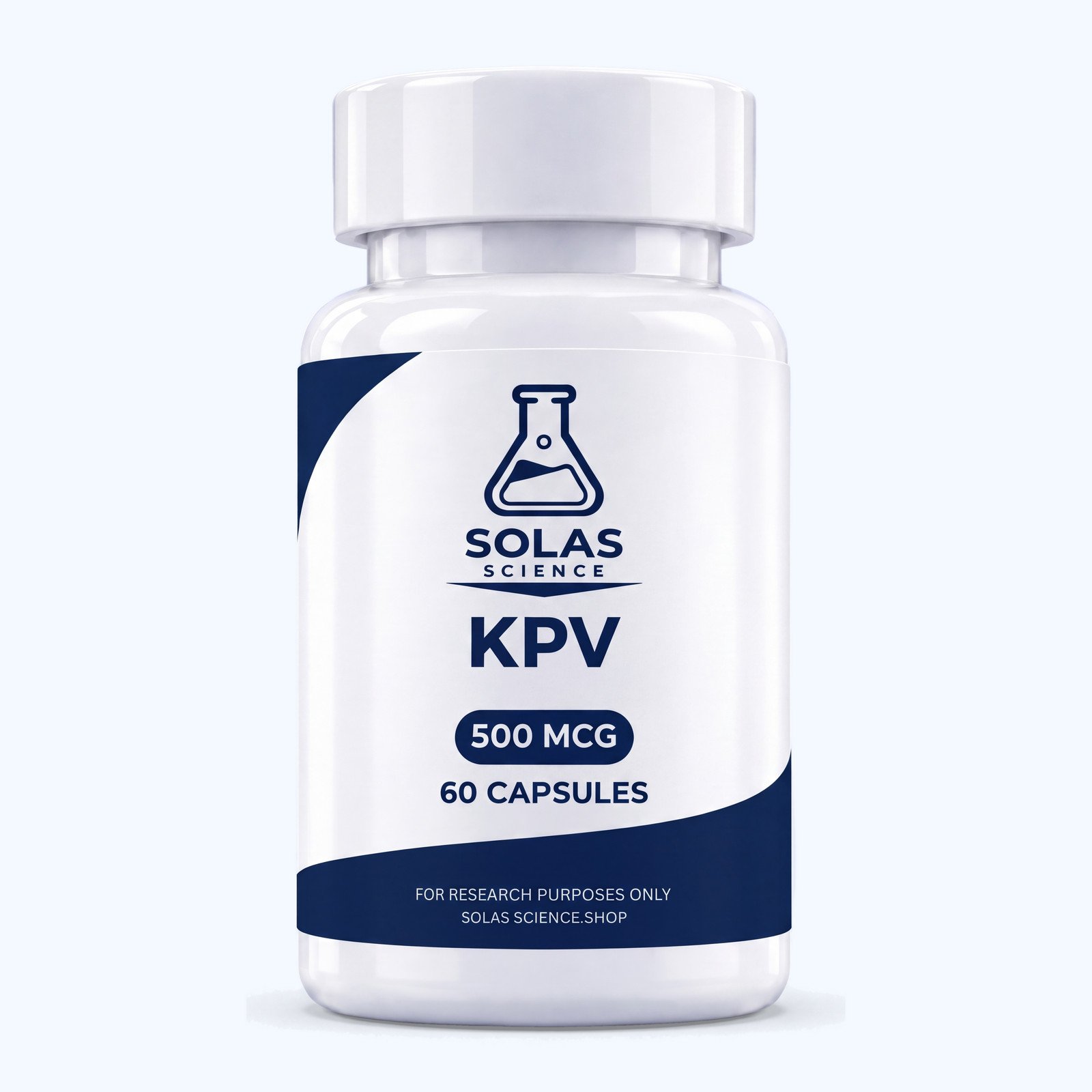
Solas Science supplies KPV as a research-grade compound in a standardized 500 mcg encapsulated format, prepared under controlled manufacturing conditions with quality procedures designed to support consistency, reliability, and analytical reproducibility.
For laboratory research use only. Not for human or veterinary use. Not a dietary supplement, food, drug, or cosmetic. Not for diagnostic or therapeutic application.
What Is KPV?
KPV (L-lysyl-L-prolyl-L-valine) has the molecular formula C16H30N4O4 and a molecular weight of 342.43 g/mol — small enough to behave more like a small molecule than a conventional peptide in many experimental systems.
Published cell-culture work reports that KPV reduces nuclear translocation of NF-κB, the transcription factor that governs expression of many pro-inflammatory mediators, and correspondingly lowers downstream cytokine expression. Because this occurs in cells that do not express melanocortin receptors, the literature generally describes the effect as receptor-independent.
Uptake studies report that KPV enters intestinal and colonic epithelial cells via the PepT1 di- and tri-peptide transporter, which is why so much of the KPV research record concerns mucosal and gastrointestinal models specifically.
Scientific Research Areas of KPV
KPV is investigated across immunology, mucosal biology, dermatological cell research, and peptide transport science.
NF-κB and Inflammatory Transcription
The most frequently studied application concerns inflammatory gene regulation. Researchers examine:
- NF-κB nuclear translocation and DNA binding
- Pro-inflammatory cytokine expression, including TNF-α and IL-6
- MAPK pathway activity alongside NF-κB signaling
- Receptor-independent versus melanocortin receptor-mediated effects
Melanocortin Signaling Research
As the terminal fragment of α-MSH, KPV is used to dissect melanocortin pharmacology:
- Structure-activity relationships across α-MSH fragments
- Separation of anti-inflammatory activity from pigmentary activity
- Comparison with full-length α-MSH and other C-terminal analogs
- Melanocortin receptor subtype expression in target tissues
Intestinal Epithelial and Mucosal Models
PepT1-mediated uptake makes gut epithelium a central research setting:
- PepT1 transporter expression and peptide uptake kinetics
- Epithelial barrier function and tight-junction integrity
- Colitis and mucosal inflammation models
- Nanoparticle and targeted delivery method development
Dermatological and Antimicrobial Cell Research
Additional work examines KPV in skin and host-defense contexts, including:
- Keratinocyte and fibroblast inflammatory response in culture
- Wound-healing endpoints in preclinical models
- Reported antimicrobial activity against bacterial and fungal isolates
- Comparison with other small anti-inflammatory peptides
Product Specifications
- Compound: KPV (lysine-proline-valine tripeptide)
- Format: Capsule
- Strength: 500 mcg per capsule
- Count: 60 capsules per bottle
- Total content: 30 mg
- Intended use: Laboratory and analytical research applications only
Quality and Analytical Testing
KPV supplied by Solas Science is manufactured under controlled conditions and evaluated through quality procedures designed to support purity, consistency, and reliability for laboratory and analytical research applications.
Quality processes may include:
- Raw material assessment
- Compound identity confirmation
- Purity evaluation
- Batch consistency testing
- Controlled manufacturing environments
- Laboratory-grade packaging
Analytical documentation for the current lot is available on request.
Product Information
| Specification | Details |
| Product Name | KPV Research Compound |
| Brand | Solasscience |
| Chemical Name | L-lysyl-L-prolyl-L-valine |
| Molecular Formula | C16H30N4O4 |
| Molecular Weight | 342.43 g/mol |
| CAS Number | 67727-97-3 |
| Quantity | 60 capsules (30 mg total) |
| Strength | 500 mcg per capsule |
| Formulation | Encapsulated powder |
| Compound Type | Synthetic tripeptide, α-MSH C-terminal fragment |
| Application | Laboratory and analytical research only |
| Research Area | Inflammatory transcription and mucosal signaling |
| Quality Standard | Research grade |
Handling and Storage
Store in a cool, dry, light-protected environment away from heat sources and direct sunlight. Keep the container tightly sealed and clearly labeled for laboratory inventory. Handle in accordance with standard laboratory safety practice, including appropriate personal protective equipment. Keep out of reach of children and unauthorized personnel.
Research Use Disclaimer
This product is sold strictly for laboratory research use only. It is not intended for human consumption, human ingestion, veterinary use, therapeutic use, diagnostic use, or any in-vivo application in humans or animals. It is not a dietary supplement, food, drug, or cosmetic, and it has not been evaluated by the FDA for safety or efficacy. No statement on this page should be interpreted as a medical claim or as a recommendation for personal use.
By purchasing this product, the buyer confirms they are a qualified researcher or research organization, that they are at least 21 years of age, and that the material will be handled and used only within an appropriate research setting in compliance with all applicable local, state, and federal laws and regulations.