Research-Grade Lyophilized Dual-Agonist Peptide
GLP-TZ is a research-grade dual-agonist peptide supplied as a lyophilized powder for laboratory and analytical research applications. Developed for use in controlled research environments, GLP-TZ is intended to support investigations involving receptor-binding interactions, peptide characterization, insulin-related signaling pathways, and metabolic pathway modulation. Every batch is produced to defined purity specifications and is accompanied by comprehensive analytical documentation, giving researchers access to batch-level quality data before beginning their work.
At Solas Science, quality verification is central to every product release. Each batch of GLP-TZ undergoes seven independent quality-control assessments before shipment, including purity, identity, sterility, endotoxin, heavy metals, net content, and fentanyl screening. Results are published in a batch-specific Certificate of Analysis (COA), allowing researchers to verify the analytical profile of the material they receive.
Designed for Research Consistency
Reliable research begins with reliable materials. GLP-TZ is manufactured using established peptide synthesis processes and is supplied in a lyophilized form to help maintain product stability during storage and transportation. Each vial is prepared under controlled manufacturing procedures and assigned a unique batch number for complete lot traceability.
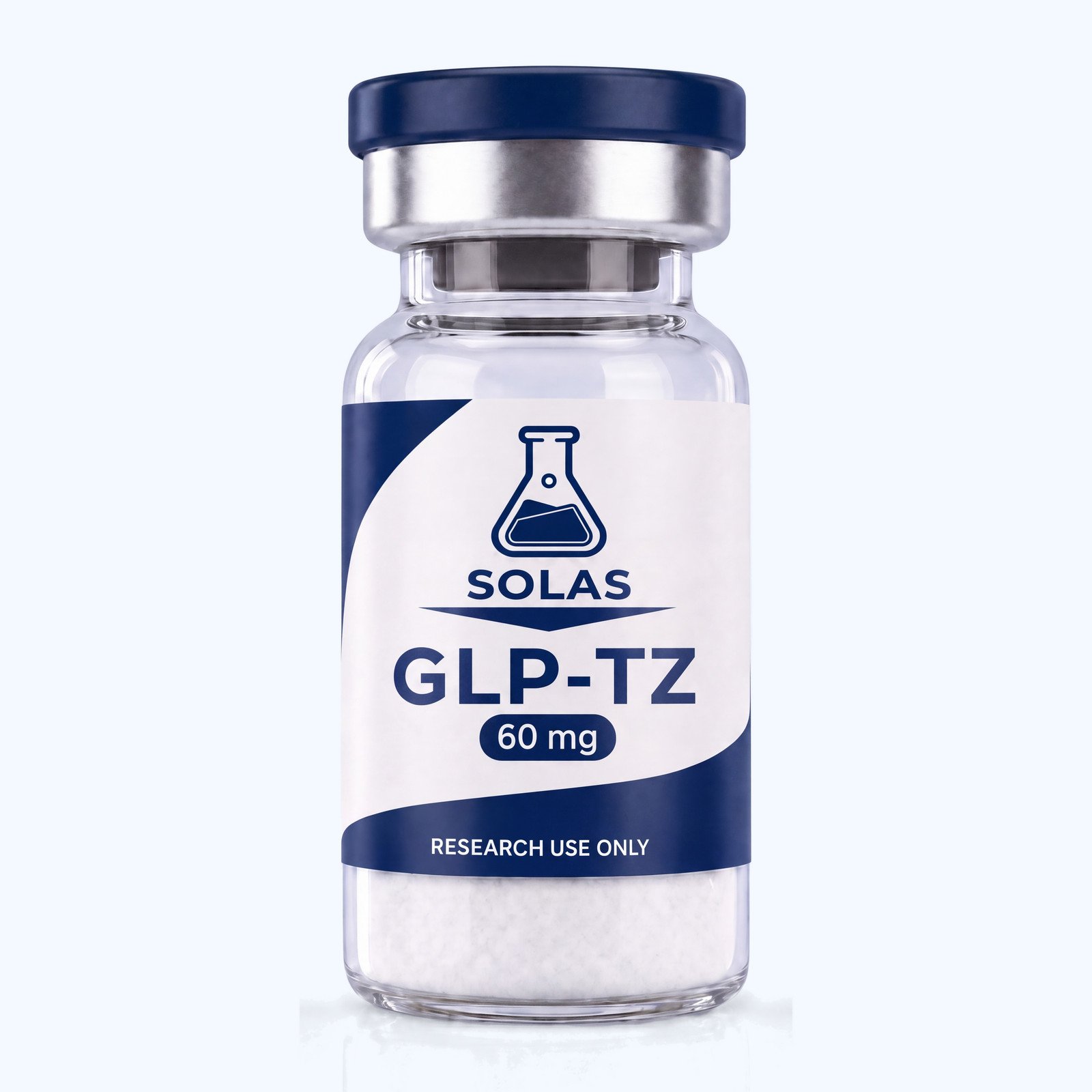
Researchers can select from 30 mg or 60 mg vial sizes depending on project requirements, allowing flexibility for different experimental designs and laboratory workflows.
The inclusion of batch-specific documentation helps reduce uncertainty by providing detailed analytical results for every production lot. Rather than relying on generic specifications, investigators can review the actual data associated with the specific batch in hand.
Applications in Laboratory Research
GLP-TZ is intended exclusively for laboratory and analytical research. Researchers may utilize this peptide in studies focused on understanding molecular interactions, receptor-binding characteristics, peptide stability, and analytical method development.
Common areas of investigation include:
- Dual receptor-binding studies
- GLP-1/GIP agonist pathway research
- Insulin-related signaling investigations
- Metabolic pathway modulation
- In vitro peptide characterization
- Analytical chemistry method validation
- Stability and degradation studies
- Reference material comparisons
- Laboratory assay development
- Structure-function relationship research
These examples describe laboratory research applications only and should not be interpreted as medical, therapeutic, or clinical uses.
Seven-Parameter Quality Testing
Every GLP-TZ batch is independently evaluated through a comprehensive quality-control program before release.
Purity Verification (HPLC)
High-performance liquid chromatography (HPLC) is used to assess peptide purity, confirming that the sample meets the specified purity for the batch.
Identity Confirmation (MS/NMR)
Mass spectrometry and/or nuclear magnetic resonance analysis are performed to confirm the molecular identity of the peptide, ensuring consistency with the expected compound.
Sterility Testing
Each batch undergoes sterility screening to assess for viable bacterial or fungal contamination before distribution.
Endotoxin Screening
Limulus Amebocyte Lysate (LAL) testing is performed to screen for bacterial endotoxins that may not be detected through purity testing alone.
Heavy Metal Analysis
ICP-MS analysis is used to evaluate the presence of heavy metals, including lead, arsenic, cadmium, and mercury, against established internal specifications.
Net Content Verification
Every vial is checked to verify that the fill weight corresponds with the labeled quantity, providing consistency across production batches.
Fentanyl Screening
Each production batch is screened using LC-MS/MS analytical methods to confirm the absence of fentanyl contamination.
Batch-Specific Certificates of Analysis
Transparency is an important part of laboratory sourcing. Every GLP-TZ batch includes a Certificate of Analysis documenting the analytical testing performed for that specific lot.
Each COA provides detailed information regarding:
- Batch identification
- Purity results
- Identity confirmation
- Sterility status
- Endotoxin results
- Heavy metal screening
- Net content verification
- Fentanyl screening
Researchers can review this documentation before incorporating the material into laboratory workflows, providing an additional level of confidence in batch traceability and quality verification.
Lyophilized Powder Format
GLP-TZ is supplied as a lyophilized powder to facilitate laboratory storage and handling. Lyophilization is a widely used preparation method that removes water under controlled conditions while helping preserve the physical characteristics of peptide materials during storage.
Researchers should follow their laboratory’s established handling, storage, and preparation procedures together with any instructions supplied with the product. Appropriate storage conditions help maintain sample integrity prior to experimental use.
Manufacturing and Documentation
Every production lot is assigned a unique batch number, allowing complete traceability throughout manufacturing, testing, and distribution.
The quality-control workflow emphasizes documentation at every stage, from synthesis through analytical verification and final packaging. This approach supports reproducibility by ensuring that researchers receive consistent batch-level information alongside each order.
Available Sizes
GLP-TZ is available in two vial sizes:
- 30 mg
- 60 mg
Both options receive the same comprehensive quality testing and include access to a batch-specific Certificate of Analysis.
Why Researchers Choose Solas Science
Solas Science is committed to providing research materials supported by transparent analytical documentation. Every GLP-TZ batch undergoes seven independent quality assessments before release, with results published in the corresponding Certificate of Analysis. Rather than relying solely on product specifications, researchers can review batch-level analytical data to verify the material supplied.
Additional features include:
- Research-grade lyophilized peptide
- Batch-specific Certificates of Analysis
- Seven-parameter quality testing
- Defined purity specifications
- Lot traceability
- Domestic U.S. fulfillment
- Secure packaging
- Same- or next-business-day dispatch on eligible orders
Research Use Only
GLP-TZ is supplied exclusively for laboratory and analytical research purposes. It is not intended for human consumption, veterinary use, therapeutic applications, diagnostic procedures, or clinical use. Purchasers are responsible for ensuring that all handling, storage, transportation, and use comply with applicable laws, regulations, and institutional policies.
Frequently Asked Questions
Is GLP-TZ intended for human use?
No. GLP-TZ is supplied strictly for laboratory and analytical research purposes. It is not intended for human consumption, veterinary use, or therapeutic or diagnostic applications.
What form is GLP-TZ supplied in?
GLP-TZ is provided as a lyophilized (freeze-dried) powder in sealed research vials and is available in 30 mg and 60 mg sizes.
Does every batch include a Certificate of Analysis?
Yes. Every production batch is accompanied by a batch-specific Certificate of Analysis (COA) detailing the analytical testing performed. The COA can be accessed through the QR code on the product or via the COA portal.
What quality tests are performed?
Each batch undergoes seven quality-control assessments, including purity (HPLC), identity (MS/NMR), sterility, endotoxin (LAL), heavy metals (ICP-MS), net content verification, and fentanyl screening (LC-MS/MS).
How should GLP-TZ be stored?
Store the product according to the storage and handling instructions provided with the vial. Following appropriate laboratory storage practices helps maintain sample integrity until use.