Frequently Asked Questions
What is IGF-1 LR3 peptide?
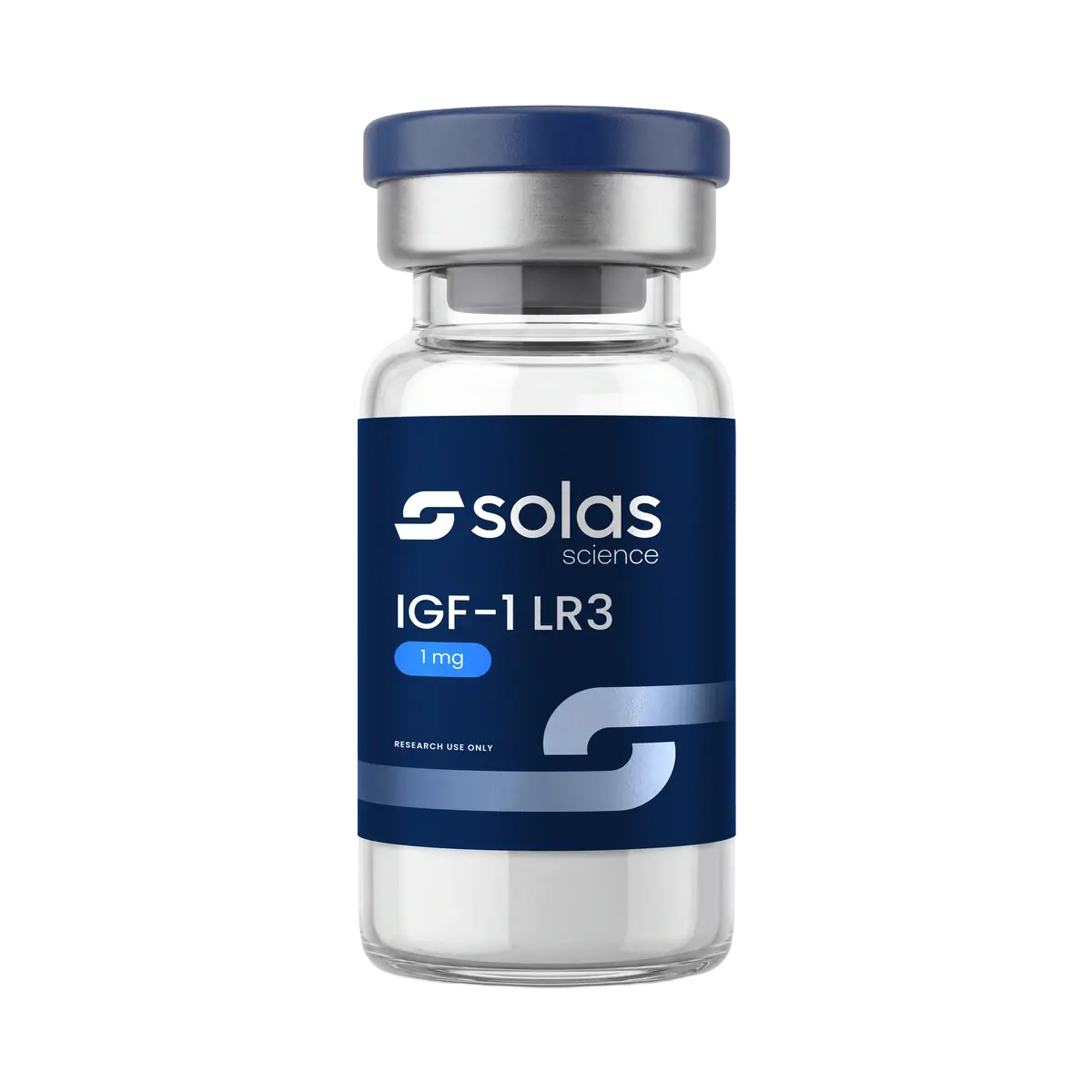
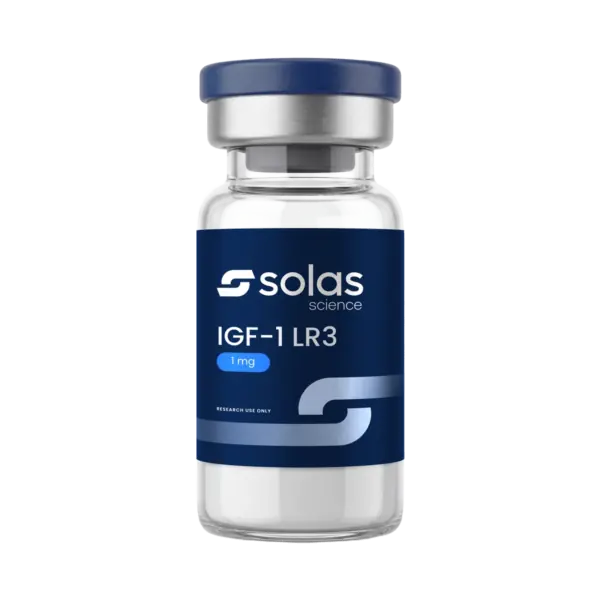
IGF-1 LR3 is a modified analogue of insulin-like growth factor 1 studied primarily in laboratory and animal research involving IGF-related biological pathways.
What does IGF-1 LR3 stand for?
IGF-1 LR3 is commonly called Long R3 IGF-1 or Long [Arg3] IGF-I, referring to structural modifications made to the native IGF-I molecule.
How is IGF-1 LR3 different from native IGF-1?
IGF-1 LR3 has an extended amino acid sequence and an amino acid substitution compared with native IGF-I. These changes affect its interaction with IGF-binding proteins.
What is IGF-1 LR3 studied for?
Research has examined IGF-1 LR3 in cellular signaling, receptor interactions, and experimental models of growth-related biological processes. These findings do not establish human clinical benefits.
How does IGF-1 LR3 interact with IGF-1 receptors?
Laboratory studies have investigated its interaction with the IGF-1 receptor and related signaling pathways. The biological activity observed in experimental systems does not establish safety or effectiveness in humans.
What is the difference between IGF-1 LR3 and mecasermin?
Mecasermin is a recombinant human IGF-1 medicine approved in the United States for a specific pediatric growth disorder. IGF-1 LR3 is a structurally modified analogue and should not be considered interchangeable with mecasermin.
Has IGF-1 LR3 been studied in humans?
No direct human clinical trials were identified in the reviewed sources. Much of the available literature concerns laboratory systems and animal models.
Is IGF-1 LR3 FDA approved?
IGF-1 LR3 is not an FDA-approved drug. Its availability as a research-labeled product does not establish authorization for human use.
What is known about IGF-1 LR3 safety?
Its human safety profile has not been adequately established. Because IGF-related pathways influence cell growth, potential biological risks require careful investigation rather than assumptions based on laboratory findings.
Is IGF-1 LR3 associated with cell growth research?
Yes. IGF-1 LR3 has been investigated in research involving cell growth and IGF-1 receptor signaling. Experimental findings should not be interpreted as proof of muscle growth or other benefits in people.
What is the difference between IGF-1 LR3 and IGF-1 DES?
IGF-1 LR3 and des(1-3) IGF-1 are distinct modified forms of IGF-I. Their structural differences mean research findings for one analogue should not automatically be attributed to the other.
What does an IGF-1 LR3 certificate of analysis show?
A certificate of analysis may document a batch’s identity, purity, and analytical test results. Review the specific report to determine which attributes were tested and whether the results apply to the actual product lot.
Why is analytical testing important for IGF-1 LR3?
Analytical testing can help evaluate molecular identity, impurities, and product consistency. A single purity percentage does not necessarily confirm correct folding, biological activity, or the labeled quantity.
How should IGF-1 LR3 research materials be evaluated?
Review the product label, molecular identity, batch traceability, analytical methods, and available quality documentation. These checks do not establish clinical safety or effectiveness.
Is IGF-1 LR3 intended for human consumption?
A product marketed for laboratory research should not be assumed suitable for human consumption or administration. Human safety and clinical efficacy have not been established for IGF-1 LR3.