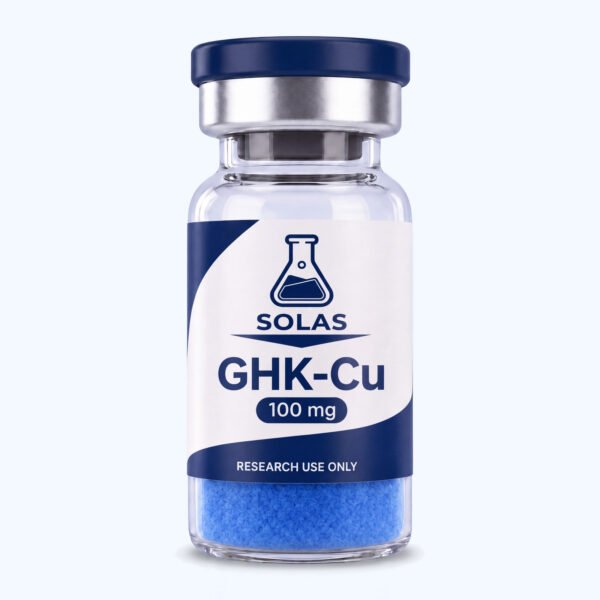
GHK-Cu is the naturally occurring tripeptide glycyl-L-histidyl-L-lysine bound to a copper(II) ion. First isolated from human plasma, it is one of the most extensively characterized copper-binding peptides in the biochemical literature and appears across tissue-remodeling, matrix biology, and transcriptomic research.
Research interest is driven in part by the observation that plasma GHK concentrations decline substantially with age, which has made the peptide a recurring subject in studies of extracellular matrix turnover, repair signaling, and age-associated changes in gene expression.
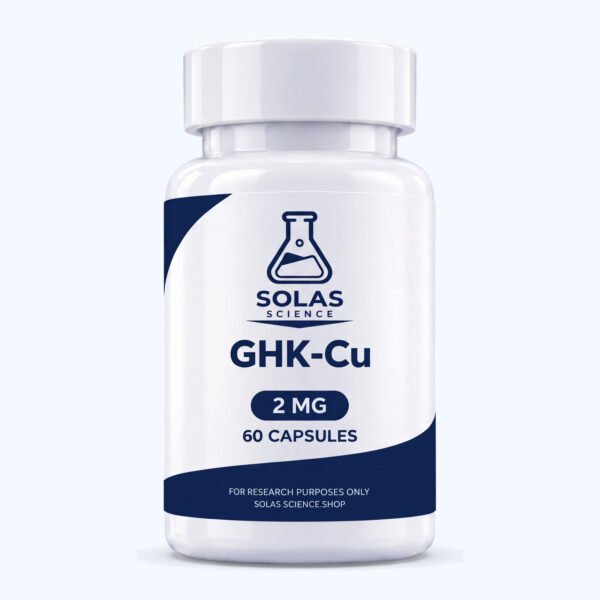
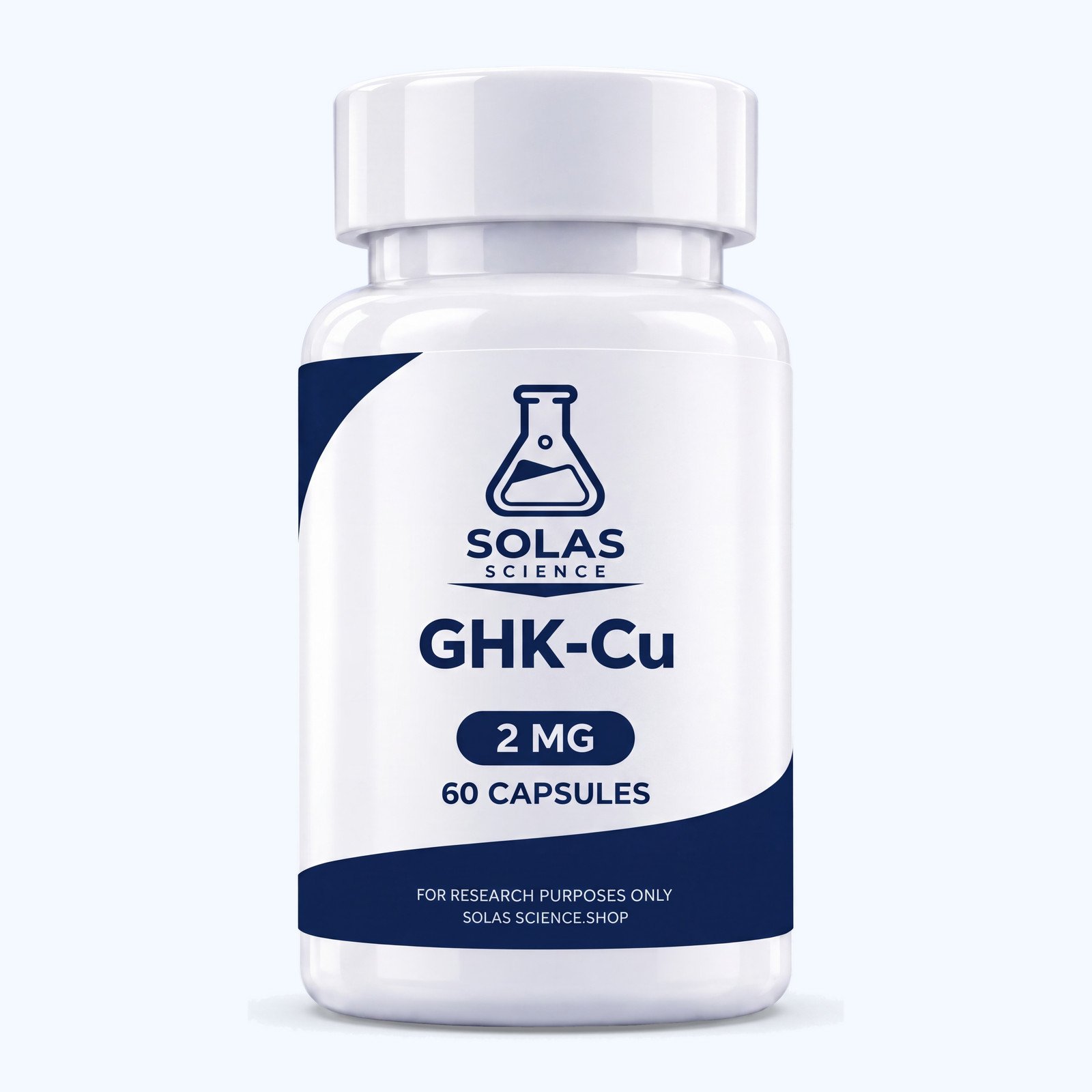
Solas Science supplies GHK-Cu as a research-grade compound in a standardized 2 mg encapsulated format, prepared under controlled manufacturing conditions with quality procedures designed to support consistency, reliability, and analytical reproducibility.
For laboratory research use only. Not for human or veterinary use. Not a dietary supplement, food, drug, or cosmetic. Not for diagnostic or therapeutic application.
What Is GHK-Cu?
The free GHK tripeptide (glycyl-L-histidyl-L-lysine) has the formula C14H24N6O4 and a molecular weight of 340.38 g/mol. In its copper-complexed form the molecular weight is approximately 403.9 g/mol.
The peptide binds copper(II) with high affinity through its histidine imidazole nitrogen, terminal amine, and backbone amide — a coordination geometry frequently used as a model system in bioinorganic chemistry. This same chemistry is what allows GHK to participate in copper transfer between plasma proteins and cells, which the literature treats as its primary physiological role.
Transcriptomic studies report that GHK exposure shifts expression across a large number of human genes, with the reported pattern favoring tissue-remodeling and antioxidant programs. Those datasets are the basis of much of the current research interest in the peptide.
Scientific Research Areas of GHK-Cu
GHK-Cu is investigated across matrix biology, bioinorganic chemistry, dermatological research, and gene-expression science.
Extracellular Matrix and Collagen Signaling
The longest-running research application concerns matrix turnover. Investigators examine:
- Collagen and elastin synthesis in fibroblast culture
- Glycosaminoglycan and proteoglycan production
- Matrix metalloproteinase and TIMP expression balance
- Fibroblast proliferation and migration endpoints
Copper Transport and Metalloprotein Research
As a model copper chelator, GHK-Cu supports bioinorganic work on:
- Copper(II) coordination chemistry and binding constants
- Copper transfer between albumin, ceruloplasmin, and cellular transporters
- Copper-dependent enzyme activity, including lysyl oxidase and SOD
- Redox behavior of the peptide-copper complex
Gene-Expression and Transcriptomic Studies
Microarray and RNA-sequencing work uses GHK to investigate:
- Broad transcriptional response profiles in cultured human cells
- Antioxidant and DNA-repair gene programs
- Comparison of GHK-responsive genes with age-associated expression changes
- Signaling pathway enrichment following exposure
Dermatological and Tissue Repair Models
Skin and wound research examines:
- Keratinocyte and fibroblast behavior in co-culture
- Wound-closure and granulation endpoints in preclinical models
- Angiogenic signaling in repair tissue
- Anti-inflammatory and antioxidant endpoints in dermal cells
Product Specifications
- Compound: GHK-Cu (copper tripeptide-1)
- Format: Capsule
- Strength: 2 mg per capsule
- Count: 60 capsules per bottle
- Total content: 120 mg
- Intended use: Laboratory and analytical research applications only
Quality and Analytical Testing
GHK-Cu supplied by Solas Science is manufactured under controlled conditions and evaluated through quality procedures designed to support purity, consistency, and reliability for laboratory and analytical research applications.
Quality processes may include:
- Raw material assessment
- Compound identity confirmation
- Purity evaluation
- Batch consistency testing
- Controlled manufacturing environments
- Laboratory-grade packaging
Analytical documentation for the current lot is available on request.
Product Information
| Specification | Details |
| Product Name | GHK-Cu Research Compound |
| Brand | Solasscience |
| Chemical Name | Glycyl-L-histidyl-L-lysine copper(II) complex |
| Molecular Formula | C14H22CuN6O4 |
| Molecular Weight | 403.9 g/mol (GHK peptide 340.38 g/mol) |
| CAS Number | 49557-75-7 |
| Quantity | 60 capsules (120 mg total) |
| Strength | 2 mg per capsule |
| Formulation | Encapsulated powder |
| Compound Type | Copper-binding tripeptide complex |
| Application | Laboratory and analytical research only |
| Research Area | Extracellular matrix, copper transport and gene expression |
| Quality Standard | Research grade |
Handling and Storage
Store in a cool, dry, light-protected environment away from heat sources and direct sunlight. Keep the container tightly sealed and clearly labeled for laboratory inventory. Handle in accordance with standard laboratory safety practice, including appropriate personal protective equipment. Keep out of reach of children and unauthorized personnel.
Research Use Disclaimer
This product is sold strictly for laboratory research use only. It is not intended for human consumption, human ingestion, veterinary use, therapeutic use, diagnostic use, or any in-vivo application in humans or animals. It is not a dietary supplement, food, drug, or cosmetic, and it has not been evaluated by the FDA for safety or efficacy. No statement on this page should be interpreted as a medical claim or as a recommendation for personal use.
By purchasing this product, the buyer confirms they are a qualified researcher or research organization, that they are at least 21 years of age, and that the material will be handled and used only within an appropriate research setting in compliance with all applicable local, state, and federal laws and regulations.