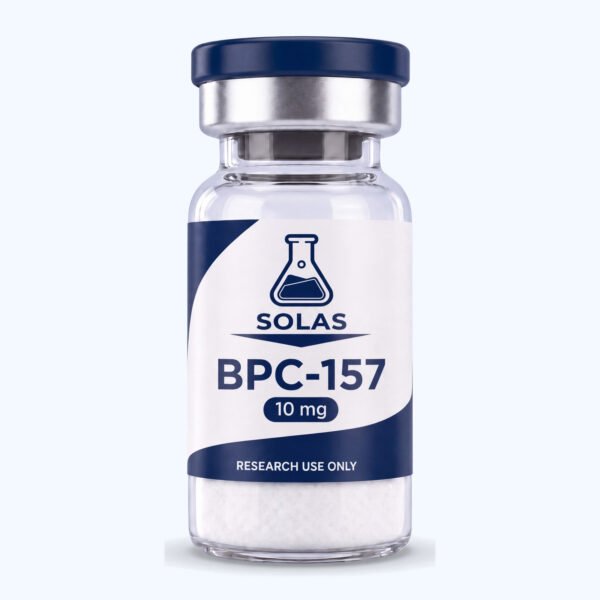
BPC-157 (Body Protection Compound-157) is a synthetic pentadecapeptide — a 15-amino-acid sequence derived from a protein fragment originally identified in gastric juice. It is among the most frequently cited peptides in published preclinical literature, appearing across gastrointestinal, vascular, and connective tissue research.
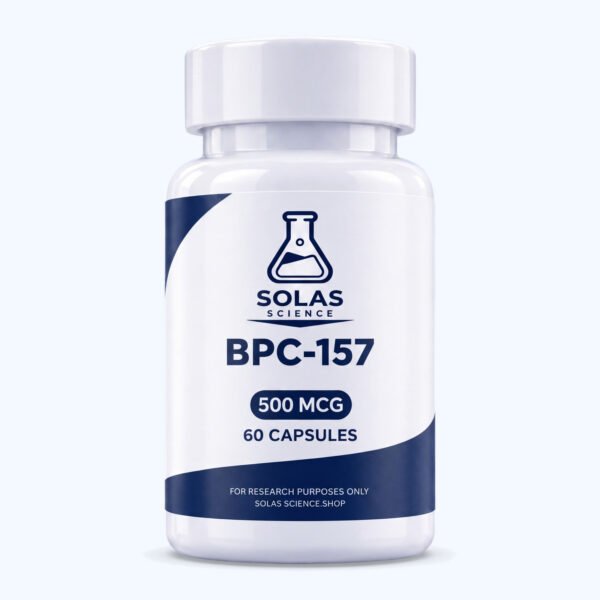
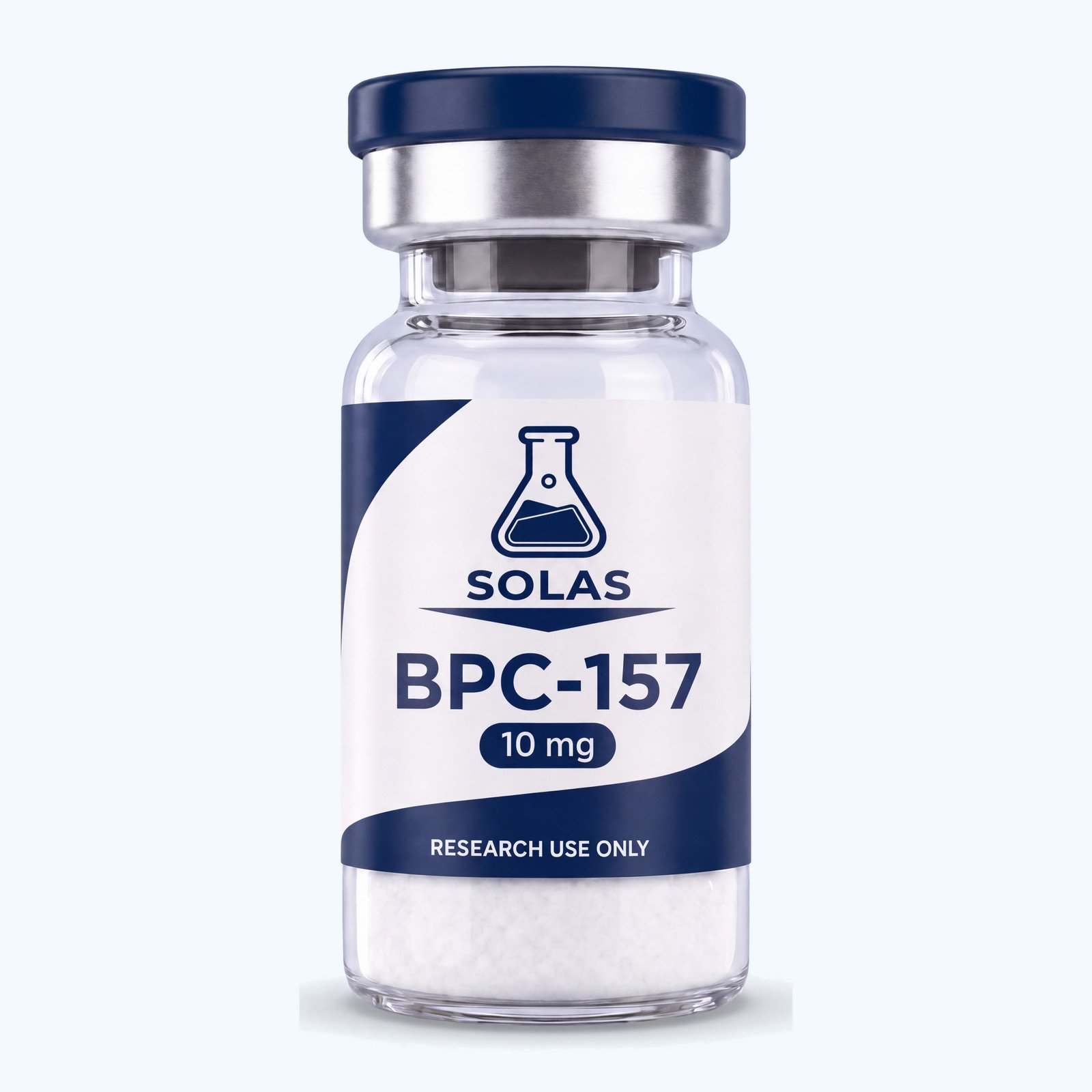
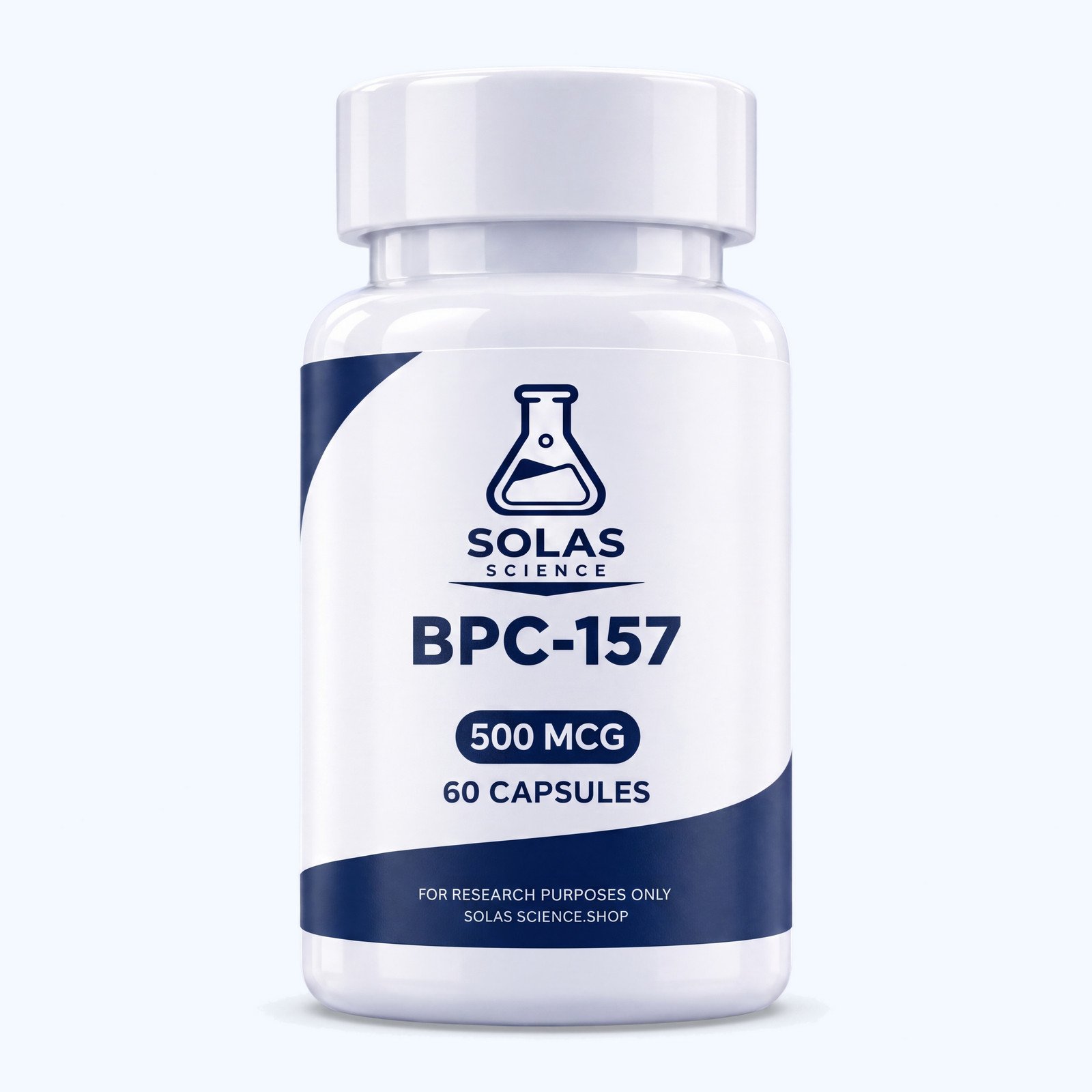
This capsule presentation supplies BPC-157 as encapsulated powder rather than as a lyophilized vial, giving investigators a pre-measured solid-dose format for study designs that do not require reconstitution or sterile handling. Researchers working with cell culture or solution-phase assays may prefer the lyophilized vial format instead.
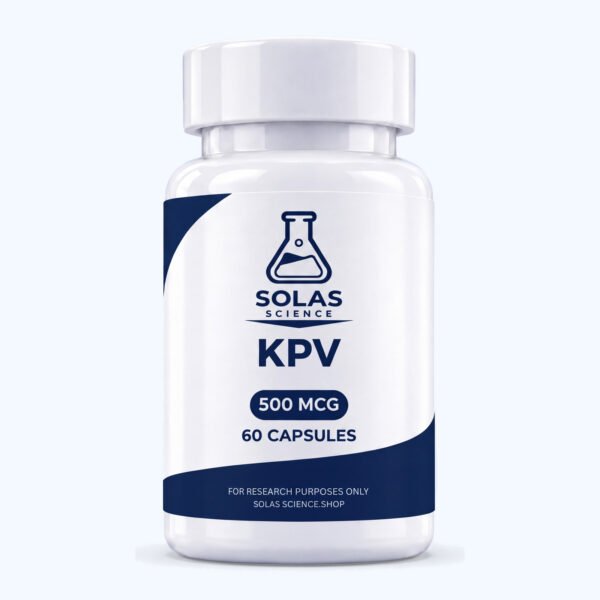
Solas Science supplies BPC-157 as a research-grade compound in a standardized 500 mcg encapsulated format, prepared under controlled manufacturing conditions with quality procedures designed to support consistency, reliability, and analytical reproducibility.
For laboratory research use only. Not for human or veterinary use. Not a dietary supplement, food, drug, or cosmetic. Not for diagnostic or therapeutic application.
What Is BPC-157?
BPC-157 is a stable synthetic sequence corresponding to residues 14–28 of the protein BPC, a gastric protein fragment. Its sequence is Gly-Glu-Pro-Pro-Pro-Gly-Lys-Pro-Ala-Asp-Asp-Ala-Gly-Leu-Val, with the molecular formula C62H98N16O22 and a molecular weight of 1419.53 g/mol.
A property noted repeatedly in the literature is its reported stability in gastric acid and in aqueous solution without a carrier — unusual for a peptide of this length, and the reason oral and solution-phase experimental designs appear so often in BPC-157 research.
Mechanistic work most commonly centers on interaction with the nitric oxide system and with VEGFR2 signaling, which is how the peptide’s frequently reported angiogenic effects in preclinical models are generally explained.
Scientific Research Areas of BPC-157
BPC-157 is investigated across vascular biology, gastroenterology, musculoskeletal research, and neurochemistry.
Angiogenesis and Vascular Signaling
The most heavily studied application involves blood vessel formation and endothelial behavior. Researchers examine:
- VEGFR2 activation and downstream endothelial signaling
- Endothelial nitric oxide synthase (eNOS) expression and nitric oxide production
- Endothelial cell migration and tube formation in culture
- Collateral vessel development in preclinical vascular models
Gastrointestinal Barrier Research
Given its origin as a gastric protein fragment, BPC-157 appears throughout gut research investigating:
- Mucosal barrier integrity and epithelial tight-junction protein expression
- Intestinal permeability in experimental models
- Gastric and intestinal lesion models
- Interaction between the gut epithelium and local vascular supply
Musculoskeletal and Connective Tissue Models
Connective tissue research uses BPC-157 to study:
- Tendon and ligament fibroblast proliferation and migration
- Collagen organization and extracellular matrix deposition
- Growth factor receptor expression in tendon-derived cells
- Muscle and bone repair endpoints in preclinical models
Neurochemical and Gut-Brain Axis Research
A smaller but growing body of work examines central endpoints, including:
- Dopaminergic and serotonergic system interactions
- Blood-brain barrier integrity in experimental models
- Neuroprotection endpoints following experimental insult
- Gut-brain axis signaling and vagal pathways
Product Specifications
- Compound: BPC-157 (Body Protection Compound-157)
- Format: Capsule
- Strength: 500 mcg per capsule
- Count: 60 capsules per bottle
- Total content: 30 mg
- Intended use: Laboratory and analytical research applications only
Quality and Analytical Testing
BPC-157 supplied by Solas Science is manufactured under controlled conditions and evaluated through quality procedures designed to support purity, consistency, and reliability for laboratory and analytical research applications.
Quality processes may include:
- Raw material assessment
- Compound identity confirmation
- Purity evaluation
- Batch consistency testing
- Controlled manufacturing environments
- Laboratory-grade packaging
Analytical documentation for the current lot is available on request.
Product Information
| Specification | Details |
| Product Name | BPC-157 Research Compound |
| Brand | Solasscience |
| Chemical Name | Gly-Glu-Pro-Pro-Pro-Gly-Lys-Pro-Ala-Asp-Asp-Ala-Gly-Leu-Val |
| Molecular Formula | C62H98N16O22 |
| Molecular Weight | 1419.53 g/mol |
| CAS Number | 137525-51-0 |
| Quantity | 60 capsules (30 mg total) |
| Strength | 500 mcg per capsule |
| Formulation | Encapsulated powder |
| Compound Type | Synthetic pentadecapeptide |
| Application | Laboratory and analytical research only |
| Research Area | Angiogenesis, gut-barrier and connective tissue signaling |
| Quality Standard | Research grade |
Handling and Storage
Store in a cool, dry, light-protected environment away from heat sources and direct sunlight. Keep the container tightly sealed and clearly labeled for laboratory inventory. Handle in accordance with standard laboratory safety practice, including appropriate personal protective equipment. Keep out of reach of children and unauthorized personnel.
Research Use Disclaimer
This product is sold strictly for laboratory research use only. It is not intended for human consumption, human ingestion, veterinary use, therapeutic use, diagnostic use, or any in-vivo application in humans or animals. It is not a dietary supplement, food, drug, or cosmetic, and it has not been evaluated by the FDA for safety or efficacy. No statement on this page should be interpreted as a medical claim or as a recommendation for personal use.
By purchasing this product, the buyer confirms they are a qualified researcher or research organization, that they are at least 21 years of age, and that the material will be handled and used only within an appropriate research setting in compliance with all applicable local, state, and federal laws and regulations.