Methylene blue (methylthioninium chloride) is a phenothiazinium compound first synthesized in 1876 and one of the longest-studied redox-active molecules in the scientific record. It has served continuously as a histological stain, a microbiological reagent, and a research probe across analytical chemistry and cell biology.
Contemporary research interest centers on its behavior as a redox cycler. At low concentrations methylene blue can accept electrons from NADH and donate them to cytochrome c, effectively bypassing segments of the mitochondrial electron transport chain — the property behind most current mitochondrial research using the compound. At higher concentrations the same redox chemistry reverses toward pro-oxidant behavior, producing a well-documented hormetic dose-response that is itself a research subject.
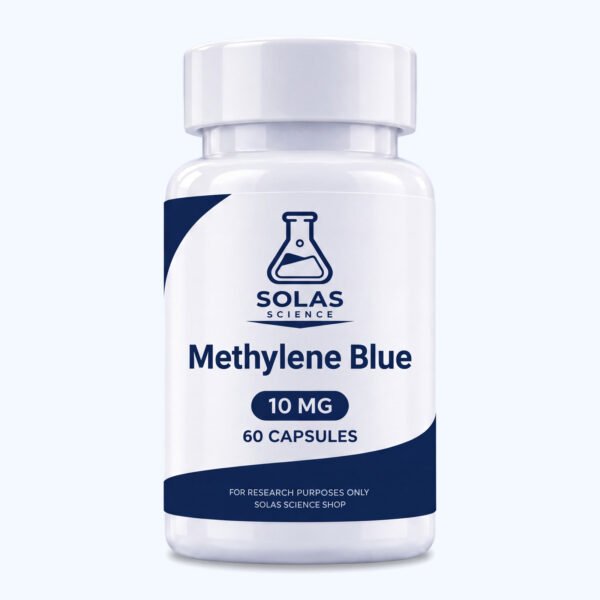
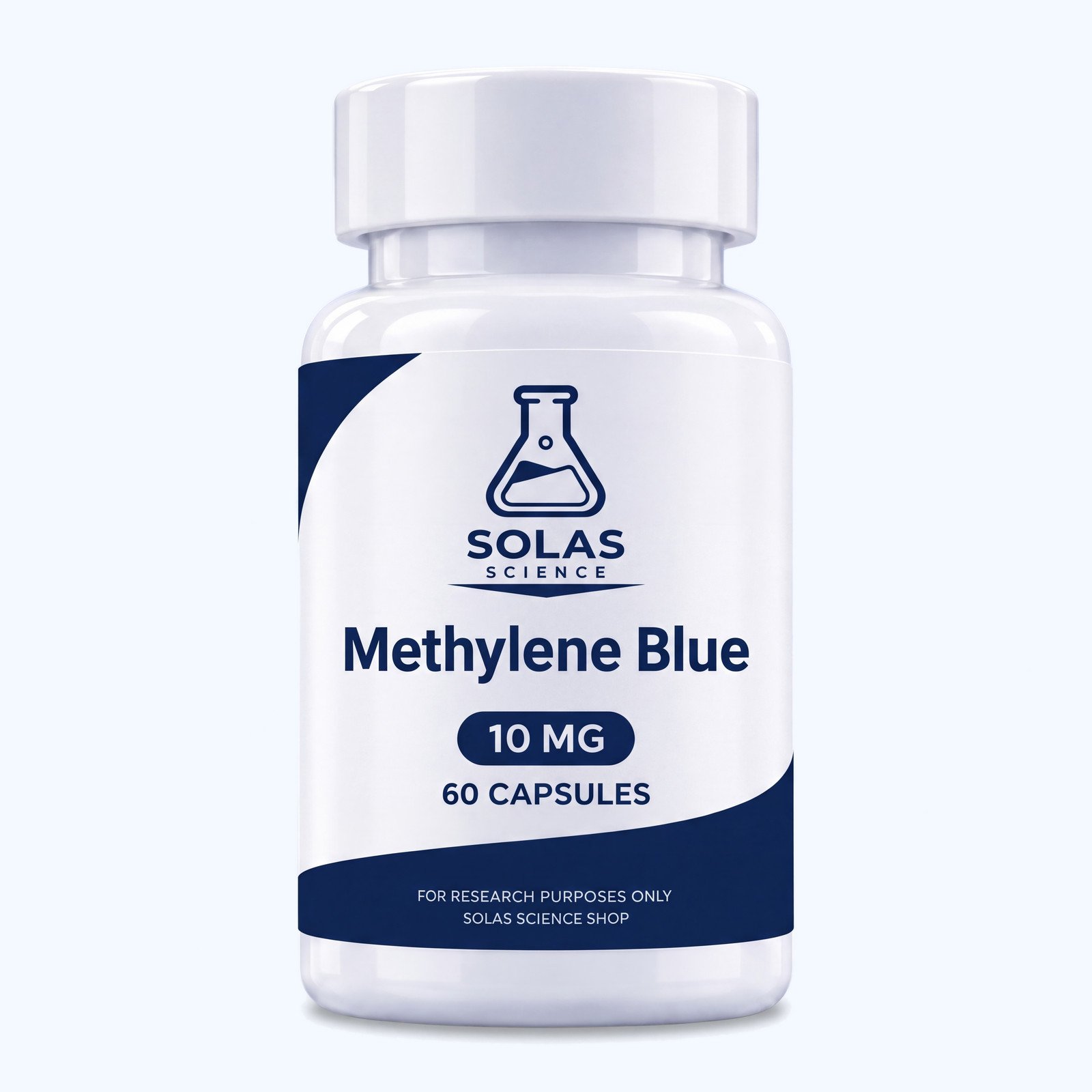
Solas Science supplies methylene blue as a research-grade compound in a standardized 10 mg encapsulated format, prepared under controlled manufacturing conditions with quality procedures designed to support consistency, reliability, and analytical reproducibility.
For laboratory research use only. Not for human or veterinary use. Not a dietary supplement, food, drug, or cosmetic. Not for diagnostic or therapeutic application.
What Is Methylene Blue?
Methylene blue (CAS 61-73-4) is 3,7-bis(dimethylamino)phenothiazin-5-ium chloride, with the molecular formula C16H18ClN3S and a molecular weight of 319.85 g/mol. It is a deeply blue, water-soluble solid that becomes colorless on reduction to leucomethylene blue and returns to blue on oxidation — a visible redox couple that has made it a standard teaching and analytical reagent.
That reversible two-electron couple is the basis of nearly every research application. In cellular systems it allows methylene blue to act as an alternative electron carrier; in analytical chemistry it underpins redox indicator assays, adsorption studies, and photodynamic method development.
Purity grade matters more with methylene blue than with most compounds, because industrial-grade material has historically carried heavy-metal and organic contaminants that confound sensitive assays. Research applications generally call for material characterized for contaminant content.
Scientific Research Areas of Methylene Blue
Methylene blue is investigated across mitochondrial biology, redox chemistry, microbiology, and analytical method development.
Mitochondrial Electron Transport Research
The most active current research area concerns bioenergetics. Investigators examine:
- Electron shuttling between NADH and cytochrome c
- Oxygen consumption rate in isolated mitochondria and intact cells
- Complex I and Complex III bypass under inhibited conditions
- ATP production and cellular respiration endpoints
Redox Cycling and Oxidative Stress Models
The concentration-dependent reversal from antioxidant to pro-oxidant behavior is studied through:
- Hormetic dose-response characterization
- Reactive oxygen species generation across concentration ranges
- Glutathione and cellular antioxidant pool dynamics
- Photodynamic activity under light exposure
Enzyme Inhibition Research
Methylene blue is a reference inhibitor in several enzyme systems, supporting work on:
- Monoamine oxidase A inhibition and kinetics
- Soluble guanylate cyclase and nitric oxide pathway signaling
- Nitric oxide synthase activity in cell and tissue preparations
- Selectivity profiling against related enzyme targets
Staining, Microbiology and Analytical Applications
Its oldest applications remain in active methodological use:
- Histological and cytological staining protocols
- Bacterial viability and Gram-staining counterstain procedures
- Adsorption capacity assays for activated carbon and novel sorbents
- Spectrophotometric and redox-indicator method development
Product Specifications
- Compound: Methylene blue (methylthioninium chloride)
- Format: Capsule
- Strength: 10 mg per capsule
- Count: 60 capsules per bottle
- Total content: 600 mg
- Intended use: Laboratory and analytical research applications only
Quality and Analytical Testing
Methylene Blue supplied by Solas Science is manufactured under controlled conditions and evaluated through quality procedures designed to support purity, consistency, and reliability for laboratory and analytical research applications.
Quality processes may include:
- Raw material assessment
- Compound identity confirmation
- Purity evaluation
- Batch consistency testing
- Controlled manufacturing environments
- Laboratory-grade packaging
Analytical documentation for the current lot is available on request.
Product Information
| Specification | Details |
| Product Name | Methylene Blue Research Compound |
| Brand | Solasscience |
| Chemical Name | 3,7-bis(dimethylamino)phenothiazin-5-ium chloride |
| Molecular Formula | C16H18ClN3S |
| Molecular Weight | 319.85 g/mol |
| CAS Number | 61-73-4 |
| Quantity | 60 capsules (600 mg total) |
| Strength | 10 mg per capsule |
| Formulation | Encapsulated powder |
| Compound Type | Phenothiazinium redox-active dye |
| Application | Laboratory and analytical research only |
| Research Area | Mitochondrial electron transport and redox biology |
| Quality Standard | Research grade |
Handling and Storage
Store in a cool, dry, light-protected environment away from heat sources and direct sunlight. Keep the container tightly sealed and clearly labeled for laboratory inventory. Handle in accordance with standard laboratory safety practice, including appropriate personal protective equipment. Keep out of reach of children and unauthorized personnel.
Research Use Disclaimer
This product is sold strictly for laboratory research use only. It is not intended for human consumption, human ingestion, veterinary use, therapeutic use, diagnostic use, or any in-vivo application in humans or animals. It is not a dietary supplement, food, drug, or cosmetic, and it has not been evaluated by the FDA for safety or efficacy. No statement on this page should be interpreted as a medical claim or as a recommendation for personal use.
By purchasing this product, the buyer confirms they are a qualified researcher or research organization, that they are at least 21 years of age, and that the material will be handled and used only within an appropriate research setting in compliance with all applicable local, state, and federal laws and regulations.