SLU-PP-332 is a synthetic small-molecule agonist of the estrogen-related receptors — ERRα, ERRβ, and ERRγ — a family of orphan nuclear receptors that govern the transcriptional programs behind mitochondrial biogenesis and oxidative metabolism. It emerged from academic nuclear-receptor pharmacology and is frequently described in the research literature as an “exercise mimetic.”
Researchers investigate SLU-PP-332 to understand how transcriptional control of mitochondrial programs translates into measurable changes in cellular respiration, substrate utilization, and skeletal-muscle phenotype in experimental models — effects that otherwise require sustained physical training to produce.
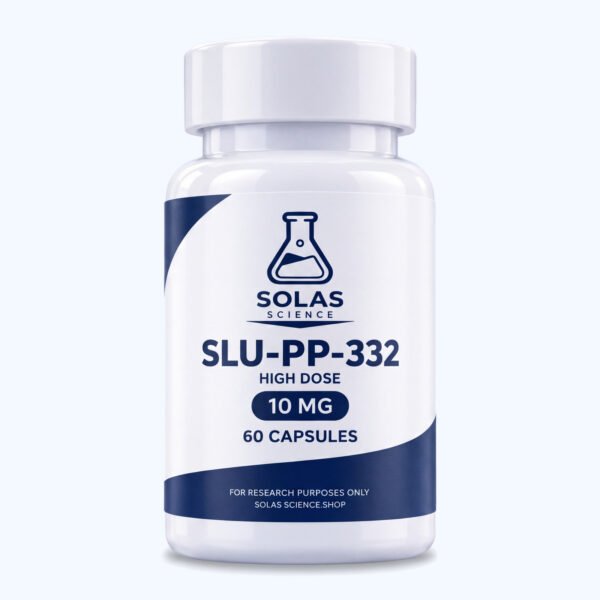
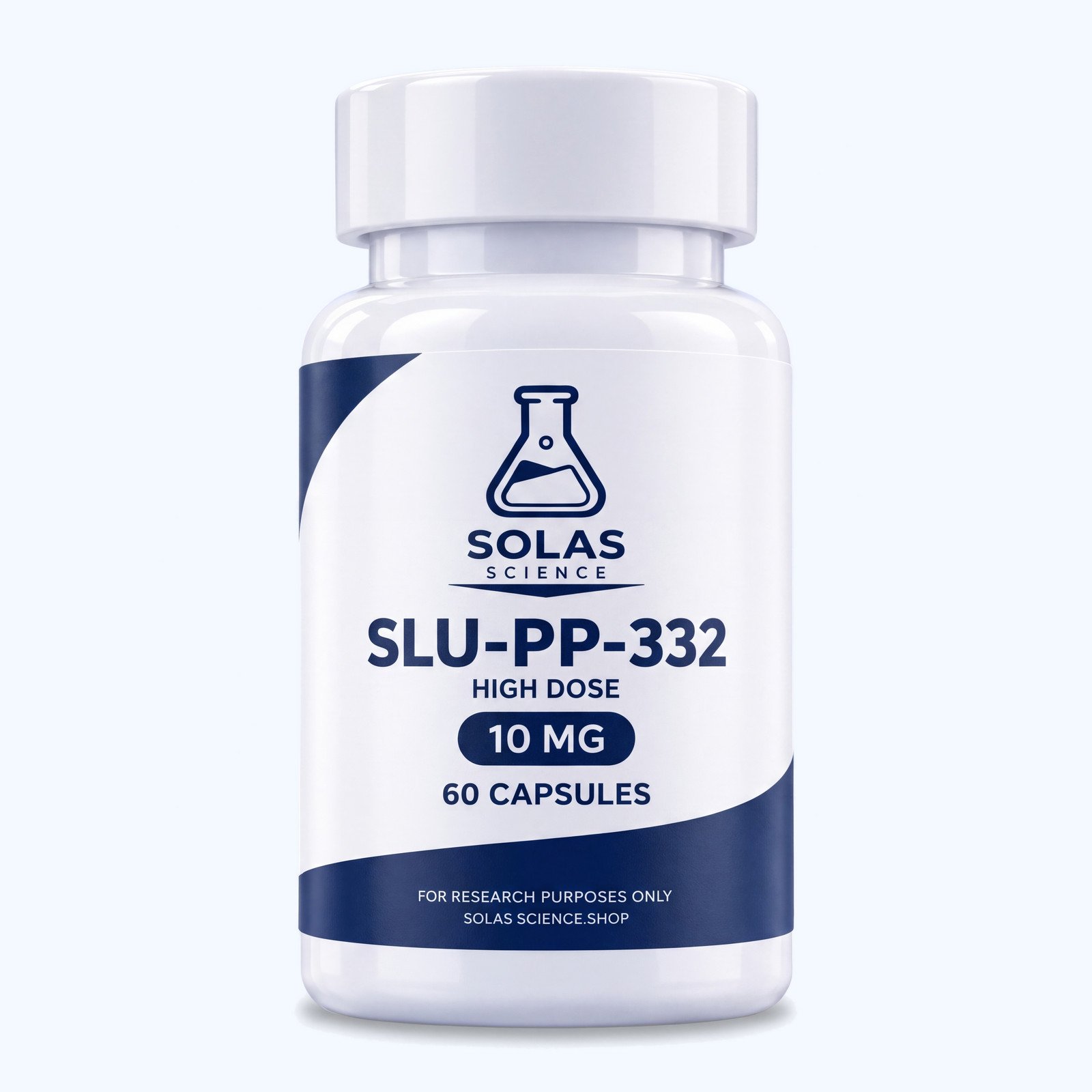
Solas Science supplies SLU-PP-332 as a research-grade compound in a standardized 10 mg encapsulated format, prepared under controlled manufacturing conditions with quality procedures designed to support consistency, reliability, and analytical reproducibility.
For laboratory research use only. Not for human or veterinary use. Not a dietary supplement, food, drug, or cosmetic. Not for diagnostic or therapeutic application.
What Is SLU-PP-332?
SLU-PP-332 (CAS 303760-60-3) is an acylhydrazone with the chemical name 4-hydroxybenzoic acid 2-(2-naphthalenylmethylene)hydrazide. Its molecular formula is C18H14N2O2, with a molecular weight of 290.3 g/mol.
The estrogen-related receptors are described as orphan nuclear receptors: they are constitutively active and have no confirmed endogenous ligand, which historically made them difficult to study pharmacologically. SLU-PP-332 is one of a small number of synthetic agonists reported to increase their transcriptional activity, with published EC50 values in the low-nanomolar to mid-nanomolar range across the three isoforms.
Despite the name, the estrogen-related receptors are structurally related to but functionally distinct from the classical estrogen receptors, and they do not bind estradiol. This distinction is a recurring subject in the nuclear-receptor literature and part of why selective ERR tool compounds are of research interest.
Scientific Research Areas of SLU-PP-332
SLU-PP-332 is investigated across nuclear-receptor pharmacology, mitochondrial biology, and metabolic research.
Estrogen-Related Receptor Pharmacology
The primary research application involves characterizing ERR activity itself. Investigators examine:
- Isoform selectivity across ERRα, ERRβ, and ERRγ
- Coactivator recruitment, particularly PGC-1α and PGC-1β
- Transcriptional reporter assays and target-gene profiling
- Distinction between ERR and classical estrogen receptor signaling
Mitochondrial Biogenesis and Cellular Respiration
Because ERRs sit upstream of mitochondrial gene networks, experimental models explore:
- Mitochondrial DNA copy number and organelle density
- Oxygen consumption rate and extracellular acidification in cultured cells
- Fatty acid oxidation and substrate-switching endpoints
- Electron transport chain component expression
Skeletal Muscle and Exercise-Mimetic Research
The “exercise mimetic” framing comes from work in muscle models investigating:
- Oxidative versus glycolytic fiber-type gene expression
- Endurance and exercise-capacity endpoints in preclinical models
- Overlap between pharmacological ERR activation and training adaptation
- Muscle cell differentiation and myotube respiration
Metabolic and Cardiometabolic Models
Broader metabolic research using SLU-PP-332 examines:
- Adiposity, energy expenditure, and body-composition endpoints
- Glucose handling and insulin-sensitivity markers in preclinical models
- Cardiac and renal tissue metabolism, where ERRα is highly expressed
- Interaction between ERR signaling and other metabolic transcription factors
Product Specifications
- Compound: SLU-PP-332 (pan-ERR agonist)
- Format: Capsule
- Strength: 10 mg per capsule
- Count: 60 capsules per bottle
- Total content: 600 mg
- Intended use: Laboratory and analytical research applications only
Quality and Analytical Testing
SLU-PP-332 supplied by Solas Science is manufactured under controlled conditions and evaluated through quality procedures designed to support purity, consistency, and reliability for laboratory and analytical research applications.
Quality processes may include:
- Raw material assessment
- Compound identity confirmation
- Purity evaluation
- Batch consistency testing
- Controlled manufacturing environments
- Laboratory-grade packaging
Analytical documentation for the current lot is available on request.
Product Information
| Specification | Details |
| Product Name | SLU-PP-332 Research Compound |
| Brand | Solasscience |
| Chemical Name | 4-hydroxybenzoic acid 2-(2-naphthalenylmethylene)hydrazide |
| Molecular Formula | C18H14N2O2 |
| Molecular Weight | 290.3 g/mol |
| CAS Number | 303760-60-3 |
| Quantity | 60 capsules (600 mg total) |
| Strength | 10 mg per capsule |
| Formulation | Encapsulated powder |
| Compound Type | Small-molecule estrogen-related receptor (ERR) agonist |
| Application | Laboratory and analytical research only |
| Research Area | Mitochondrial biogenesis and oxidative metabolism |
| Quality Standard | Research grade |
Handling and Storage
Store in a cool, dry, light-protected environment away from heat sources and direct sunlight. Keep the container tightly sealed and clearly labeled for laboratory inventory. Handle in accordance with standard laboratory safety practice, including appropriate personal protective equipment. Keep out of reach of children and unauthorized personnel.
Research Use Disclaimer
This product is sold strictly for laboratory research use only. It is not intended for human consumption, human ingestion, veterinary use, therapeutic use, diagnostic use, or any in-vivo application in humans or animals. It is not a dietary supplement, food, drug, or cosmetic, and it has not been evaluated by the FDA for safety or efficacy. No statement on this page should be interpreted as a medical claim or as a recommendation for personal use.
By purchasing this product, the buyer confirms they are a qualified researcher or research organization, that they are at least 21 years of age, and that the material will be handled and used only within an appropriate research setting in compliance with all applicable local, state, and federal laws and regulations.