TAK-653 is a synthetic small-molecule research compound investigated as a positive allosteric modulator (PAM) of AMPA-type glutamate receptors. Also designated osavampator and NBI-1065845, it originated in pharmaceutical neuroscience research and has become a reference tool for studying fast excitatory neurotransmission in controlled laboratory settings.
Researchers investigate TAK-653 to better understand how AMPA receptor activity shapes synaptic strength, plasticity, and downstream neurotrophic signaling. Because it potentiates receptor currents only in the presence of glutamate rather than activating the receptor on its own, it allows activity-dependent potentiation to be studied separately from direct agonism — a distinction central to current glutamatergic research.
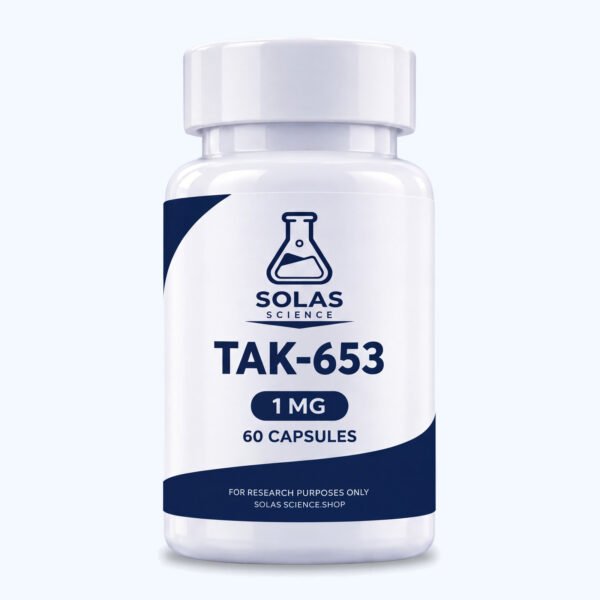
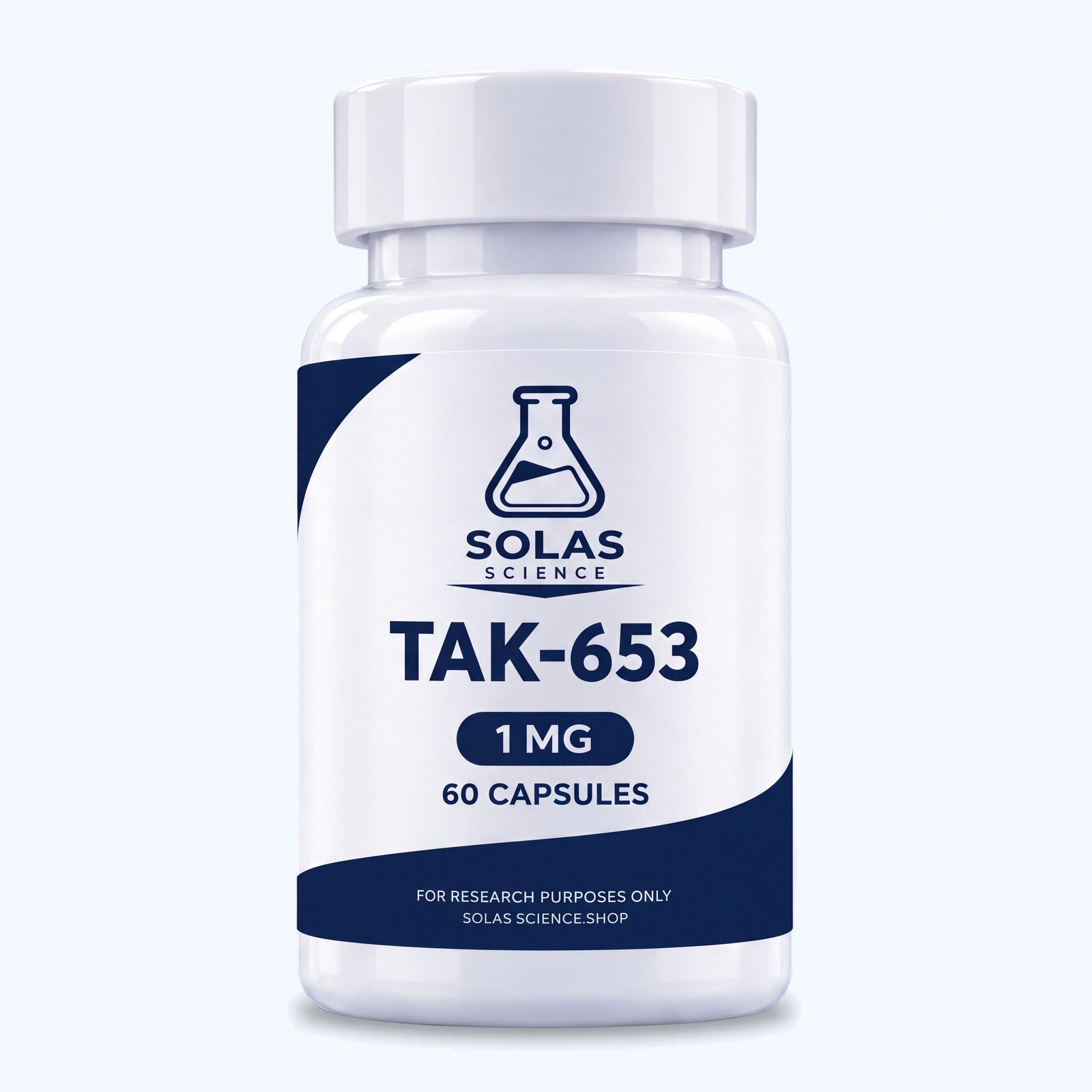
Solas Science supplies TAK-653 as a research-grade compound in a standardized 1 mg encapsulated format, prepared under controlled manufacturing conditions with quality procedures designed to support consistency, reliability, and analytical reproducibility.
For laboratory research use only. Not for human or veterinary use. Not a dietary supplement, food, drug, or cosmetic. Not for diagnostic or therapeutic application.
What Is TAK-653?
TAK-653 (CAS 1358751-06-0) is a small molecule built on a pyrazino[2,1-c][1,2,4]thiadiazine 2,2-dioxide scaffold bearing a cyclohexyloxyphenyl substituent. Its molecular formula is C19H23N3O3S, with a molecular weight of 373.5 g/mol.
Published characterization describes TAK-653 as binding AMPA receptors in a glutamate-dependent manner and inducing calcium influx in human GluA1-expressing cell lines. This is the defining feature of a positive allosteric modulator: the compound amplifies signaling that is already occurring rather than initiating it, which produces a different experimental profile from a direct agonist.
Interest in TAK-653 within the research literature stems in part from reports that it separates AMPA receptor potentiation from the excitotoxic and convulsive liability observed with earlier-generation AMPA PAM chemotypes. That reported separation makes it a useful comparator compound in safety-pharmacology and receptor-mechanism work.
Scientific Research Areas of TAK-653
TAK-653 is investigated across several domains of neuropharmacology, receptor biology, and synaptic signaling research.
Glutamatergic Signaling and AMPA Receptor Function
The most frequently studied application involves the mechanics of AMPA receptor activation. Researchers examine:
- Receptor subunit composition and channel gating kinetics
- Glutamate-dependent potentiation versus direct receptor agonism
- Desensitization and deactivation dynamics
- Calcium influx and downstream second-messenger cascades
Synaptic Plasticity Research
Because AMPA receptor trafficking underlies experience-dependent change at the synapse, TAK-653 appears in plasticity models exploring:
- Long-term potentiation in hippocampal and cortical slice preparations
- BDNF and TrkB signaling downstream of AMPA receptor activation
- Dendritic spine density and structural plasticity endpoints
- Receptor insertion, internalization, and surface expression
Neuronal Excitability and Safety-Pharmacology Models
The reported separation between potentiation and overexcitation is itself a research subject. Experimental work explores:
- Cortical excitability measures in preclinical models
- Seizure-liability screening relative to earlier AMPA PAM chemotypes
- Dose-response separation between therapeutic-range potentiation and excitotoxicity
- Electrophysiological profiling across concentration ranges
Comparative Neuropharmacology and Assay Development
TAK-653 is also used as a benchmark compound in methodological work, including:
- Benchmarking against other positive allosteric modulator scaffolds
- Species and cell-line differences in receptor pharmacology
- Calcium-flux and receptor-binding assay development
- Structure-activity relationship studies within the thiadiazine dioxide series
Product Specifications
- Compound: TAK-653 (osavampator, NBI-1065845)
- Format: Capsule
- Strength: 1 mg per capsule
- Count: 60 capsules per bottle
- Total content: 60 mg
- Intended use: Laboratory and analytical research applications only
Quality and Analytical Testing
TAK-653 supplied by Solas Science is manufactured under controlled conditions and evaluated through quality procedures designed to support purity, consistency, and reliability for laboratory and analytical research applications.
Quality processes may include:
- Raw material assessment
- Compound identity confirmation
- Purity evaluation
- Batch consistency testing
- Controlled manufacturing environments
- Laboratory-grade packaging
Analytical documentation for the current lot is available on request.
Product Information
| Specification | Details |
| Product Name | TAK-653 Research Compound |
| Brand | Solasscience |
| Chemical Name | 9-[4-(cyclohexyloxy)phenyl]-3,4-dihydro-7-methyl-pyrazino[2,1-c][1,2,4]thiadiazine 2,2-dioxide |
| Molecular Formula | C19H23N3O3S |
| Molecular Weight | 373.5 g/mol |
| CAS Number | 1358751-06-0 |
| Quantity | 60 capsules (60 mg total) |
| Strength | 1 mg per capsule |
| Formulation | Encapsulated powder |
| Compound Type | Small-molecule AMPA receptor positive allosteric modulator |
| Application | Laboratory and analytical research only |
| Research Area | Glutamatergic signaling and synaptic plasticity |
| Quality Standard | Research grade |
Handling and Storage
Store in a cool, dry, light-protected environment away from heat sources and direct sunlight. Keep the container tightly sealed and clearly labeled for laboratory inventory. Handle in accordance with standard laboratory safety practice, including appropriate personal protective equipment. Keep out of reach of children and unauthorized personnel.
Research Use Disclaimer
This product is sold strictly for laboratory research use only. It is not intended for human consumption, human ingestion, veterinary use, therapeutic use, diagnostic use, or any in-vivo application in humans or animals. It is not a dietary supplement, food, drug, or cosmetic, and it has not been evaluated by the FDA for safety or efficacy. No statement on this page should be interpreted as a medical claim or as a recommendation for personal use.
By purchasing this product, the buyer confirms they are a qualified researcher or research organization, that they are at least 21 years of age, and that the material will be handled and used only within an appropriate research setting in compliance with all applicable local, state, and federal laws and regulations.