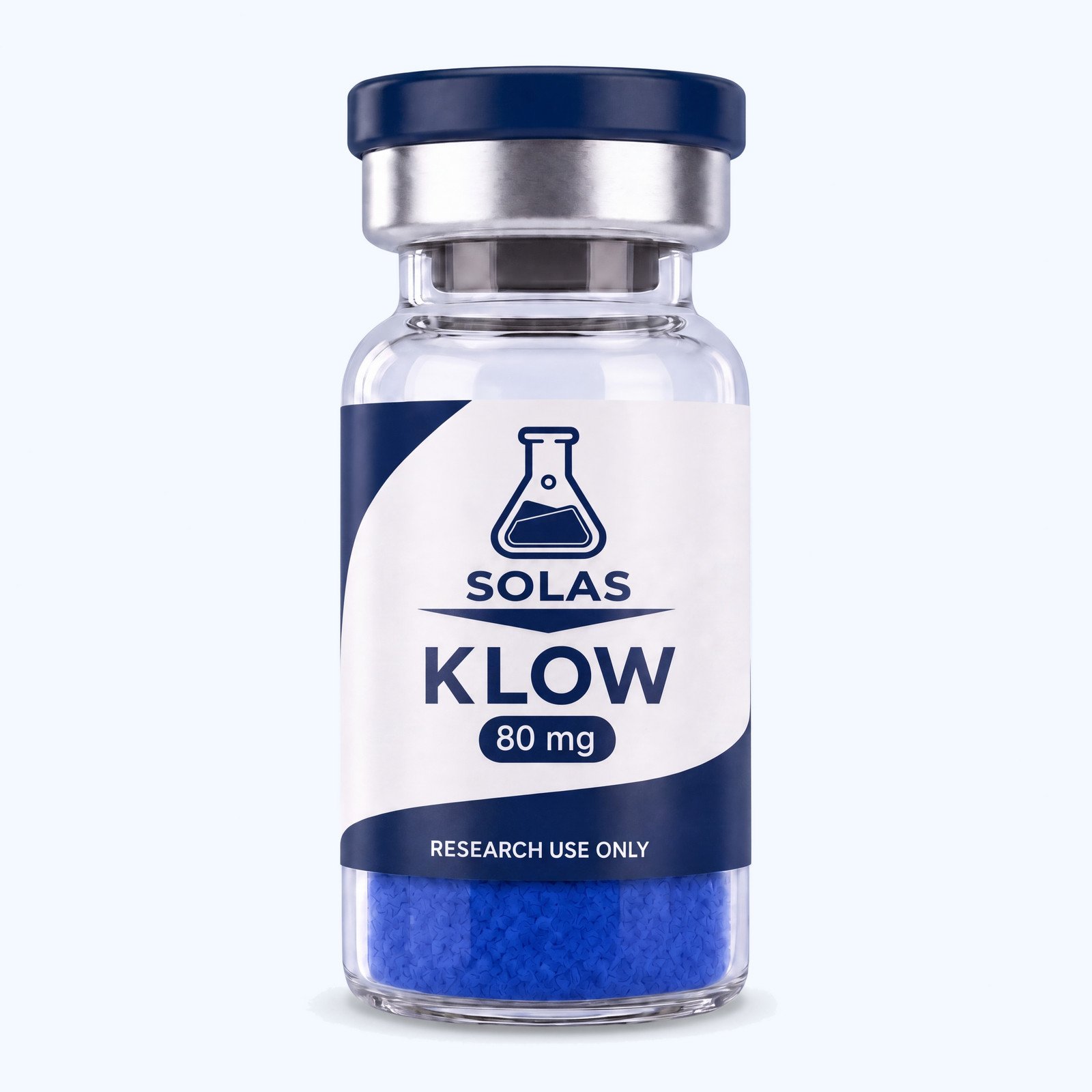
KLOW is a research-grade peptide formulation supplied as a lyophilized powder for laboratory investigation. It is intended exclusively for scientific research and is not approved for human or veterinary use. Researchers have shown growing interest in peptide-based compounds for studying cellular signaling, tissue homeostasis, and mechanisms involved in maintaining gastrointestinal barrier integrity.
The intestinal epithelium forms one of the body’s most important protective barriers, regulating nutrient absorption while limiting the passage of pathogens, toxins, and other potentially harmful substances. Understanding how epithelial cells communicate, repair damage, and respond to inflammatory stimuli is an active area of biomedical research. Research peptides are frequently used in experimental models to investigate these complex biological processes.
Research Background
The gastrointestinal lining is composed of specialized epithelial cells connected by tight junctions that help regulate intestinal permeability. These cells continuously renew themselves and respond to numerous biological signals that influence growth, differentiation, and repair.
Laboratory studies investigating peptide signaling often focus on:
- Epithelial cell maintenance
- Cellular communication pathways
- Barrier-function regulation
- Inflammatory signaling mechanisms
- Tissue regeneration biology
- Cytokine-mediated responses
Research-grade peptide formulations such as KLOW may be used in controlled experimental settings designed to improve scientific understanding of these processes. Ongoing investigation seeks to clarify molecular interactions rather than establish therapeutic applications.
Areas of Scientific Investigation
Researchers may employ peptide formulations within laboratory models to examine several aspects of gastrointestinal biology.
Epithelial Cell Integrity
The epithelial layer serves as the first line of defense between the intestinal lumen and internal tissues. Experimental studies frequently evaluate how cellular signaling influences epithelial organization, structural stability, and responses to controlled laboratory conditions.
Barrier Function
Barrier integrity depends on highly regulated protein complexes that maintain selective permeability. Research models investigate mechanisms governing tight junction proteins, epithelial permeability, and cellular adaptation following experimental stress.
Inflammatory Signaling
Inflammatory pathways involve complex interactions among cytokines, immune mediators, and epithelial cells. Scientists often study peptide interactions with these signaling networks to better understand normal physiological responses and mechanisms involved in maintaining tissue homeostasis.
Cellular Communication
Cells within the intestinal lining communicate through numerous molecular pathways. Research examines how peptides may interact with signaling cascades involved in cell survival, proliferation, differentiation, and tissue maintenance under experimental conditions.
Laboratory Applications
Research involving KLOW is limited to non-clinical laboratory settings. Experimental applications may include:
- In vitro cell culture studies
- Molecular biology research
- Gastrointestinal epithelial models
- Cell signaling investigations
- Laboratory assays examining inflammatory pathways
- Preclinical exploratory research
These research applications are intended to expand scientific knowledge and should not be interpreted as evidence of clinical benefit or therapeutic effectiveness.
Product Information
Product Name: KLOW
Quantity: 80 mg
Form: Lyophilized powder
Grade: Research grade
Intended Use: Laboratory research only
Researchers should follow established institutional protocols and applicable laboratory standards when handling research materials.
Storage and Handling
Research peptides should be stored according to the manufacturer’s recommended conditions to preserve stability. Proper laboratory handling practices include minimizing unnecessary exposure to moisture, light, and repeated freeze-thaw cycles where applicable. Documentation, labeling, and controlled storage conditions are important components of good laboratory practice.
Research Limitations
Although peptide research continues to expand, laboratory findings should not be interpreted as proof of safety or efficacy in humans or animals. Results obtained in cell culture systems or experimental models often require additional investigation before broader scientific conclusions can be drawn.
Research materials are intended solely to support scientific investigation and are not substitutes for approved medical therapies or pharmaceutical products.
Frequently Asked Questions
What is KLOW?
KLOW is a research-grade peptide formulation supplied as a lyophilized powder for laboratory investigation. It is intended exclusively for scientific research and is not approved for clinical or veterinary use.
What is KLOW used for in research?
Researchers may investigate KLOW in studies involving gastrointestinal epithelial biology, barrier-function signaling, cellular communication, inflammatory pathways, and related molecular mechanisms.
Is KLOW approved for human use?
No. KLOW is intended exclusively for laboratory research and is not approved for human consumption, veterinary use, diagnosis, or treatment.
What does “research grade” mean?
Research grade indicates that the material is intended for laboratory and scientific investigation. It does not imply approval for medical, pharmaceutical, or therapeutic use.
Why is KLOW supplied as a lyophilized powder?
Lyophilization helps improve stability during storage and transportation. Researchers typically follow established laboratory procedures for handling research materials according to their study protocols.
Can laboratory research predict clinical outcomes?
Not necessarily. Results obtained from in vitro experiments or other preclinical models do not automatically translate to effectiveness or safety in humans. Additional research is required before any clinical conclusions can be reached.
Who should handle KLOW?
Research materials should be handled by qualified laboratory personnel using appropriate safety procedures, institutional protocols, and applicable regulatory requirements.
Important Notice
KLOW is supplied exclusively for laboratory research purposes. It is not intended for human or veterinary use and has not been established as safe or effective for the diagnosis, treatment, cure, or prevention of any disease. All research involving this material should be conducted in accordance with institutional policies, ethical standards, and applicable laws and regulations.